Book Appointment Now

What is Local SEO, and how does it work for small businesses
After reading this content, you will learn how Local SEO works and how small businesses can boost their local presence on Google search.
I started my Local SEO journey to help small businesses improve their online visibility by optimizing their Google Business Profiles and local rankings.
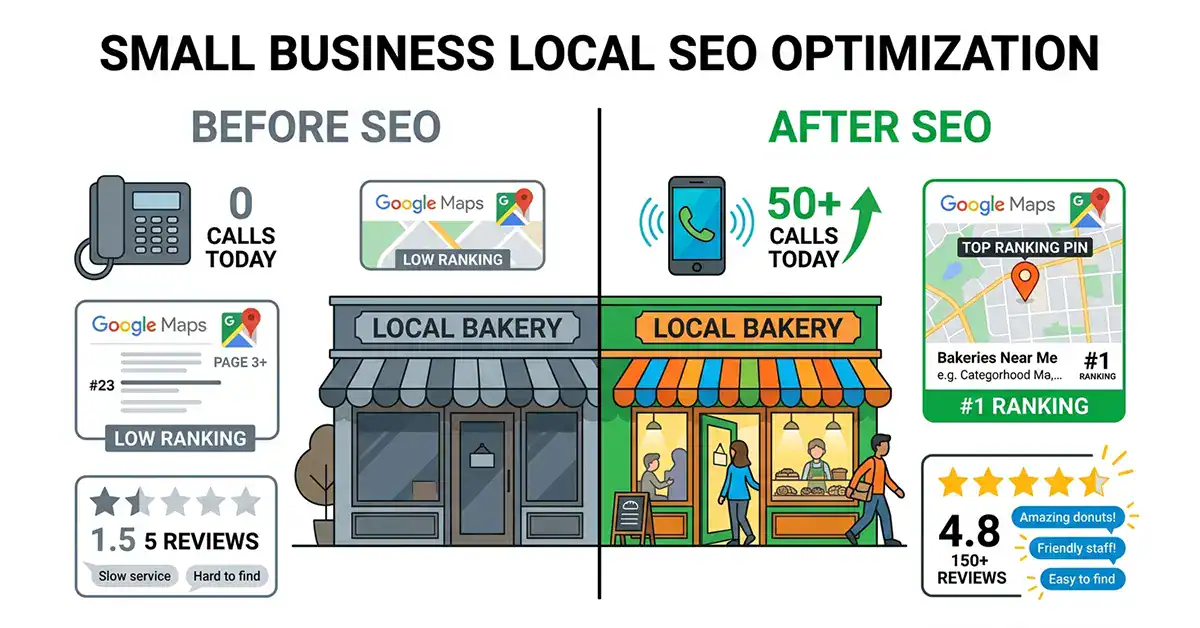
Imagine this: a small business in Dallas, struggling with minimal customer calls. Before our intervention, they averaged just 10 calls a month from local search. After implementing targeted local SEO strategies, that number surged to over 120 calls monthly within six weeks. This isn’t an anomaly; it’s the direct impact of effective local SEO.
Local SEO is the process of optimizing your business’s online presence to attract more customers from location-based searches. It’s about ensuring your business appears prominently when potential customers in your area search for products or services you offer on platforms like Google Search and Google Maps. For small businesses, this can be a game-changer, driving immediate and tangible results.
We achieved these results through a series of precise technical fixes. This included rigorous Google Business Profile optimization, ensuring every detail was accurate and compelling. We also executed a thorough local citation cleanup, correcting inconsistencies across various online directories. Each action was designed to boost the business’s visibility in local search results and attract nearby customers directly to their phone lines or storefronts.
What is Local SEO?
Local SEO is the targeted process of optimizing your business’s online presence to attract more customers from location-based searches. This includes Google Search, Google Maps, and other search engines. It ensures your business appears when nearby customers look for your services. Think of it this way: Local SEO helps local businesses get found by local customers. This specific search engine optimization approach is crucial for businesses with physical locations, like restaurants, retail stores, and mechanics. It’s equally vital for local service providers such as plumbers, electricians, and tutors operating in a specific geographical area. Google delivers billions of local search results monthly. Strong local SEO increases your online visibility, attracts nearby customers, and boosts sales. Appearing prominently for relevant location-based search queries significantly improves your chances of customer engagement and drives local traffic directly to your business.
How Google Ranks Local Businesses
Google’s algorithm considers several critical factors when determining local search results. These include relevance, distance, and prominence. Relevance assesses how well your business matches a user’s specific search query. Distance measures your business’s proximity to the user’s location or the location specified in their search. Prominence considers factors like reviews, ratings, and the overall popularity of your business. Understanding these factors is key to improving your Google Maps ranking and appearing in the local pack.
Why Local SEO Matters for Your Business
Local SEO is not just an option; it’s a necessity for any business serving a specific geographic area. It directly increases your business’s online visibility in local search results, drawing in nearby customers and boosting sales. Google processes billions of location-based search queries every month.
Appearing prominently for relevant local keywords significantly increases your chances of customer engagement. Neglecting local SEO means you’re losing potential leads and customers daily. You need to be where your customers are searching.
Local SEO vs. General SEO: Understanding the Difference
While both local SEO and general search engine optimization aim to improve online visibility, their target audiences and strategies differ significantly. General SEO focuses on broad audience reach and global rankings. Local SEO, however, is laser-focused on attracting nearby customers through local search results, including the local pack on Google Search and Google Maps ranking.
Consider the table below to see the key distinctions between these crucial SEO strategies for 2025:
| Aspect | General SEO | Local SEO |
|---|---|---|
| Primary Goal | Broad audience reach, global rankings | Attract nearby customers, local rankings |
| Target Audience | Worldwide, no location constraint | Specific geographic area, “near me” searches |
| Key Platform Focus | Website, organic search results | Google Business Profile, Google Maps ranking |
| Ranking Factors | Keywords, backlinks, content authority | Relevance, distance, prominence, reviews |
How Google Ranks Local Businesses
Google employs a sophisticated algorithm to determine which local businesses appear in local search results and the local pack. The three primary factors are relevance, distance, and prominence. Relevance refers to how well your business matches the user’s search query. Distance measures the proximity of your business to the searcher’s location. Prominence considers how well-known your business is, factoring in reviews, ratings, and overall online visibility.
To succeed, your local SEO strategies must address each of these factors. This ensures your business stands out among local service providers in cities like Dallas, Los Angeles, or Long Beach.
Optimizing Your Google Business Profile for Local Pack Dominance
Your Google Business Profile (GBP) is the cornerstone of your local SEO efforts. An optimized profile dramatically increases your chances of appearing in the local pack and achieving a higher Google Maps ranking. This involves accurately listing your business name, address, phone number (NAP), hours of operation, and services offered.
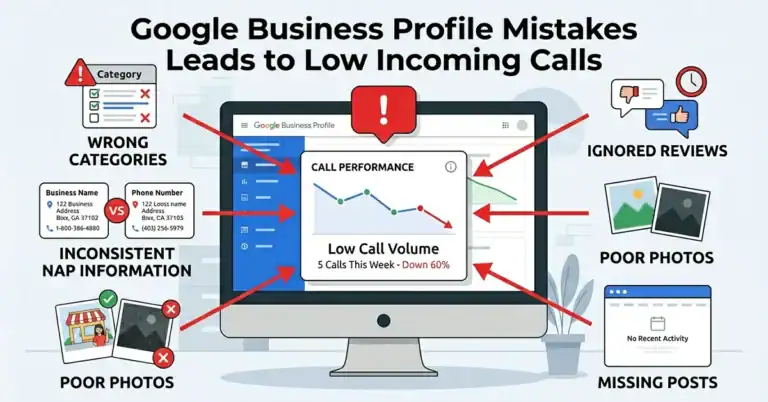
Including high-quality photos, detailed business attributes, and a compelling business description enhances online visibility. Studies show that active, well-maintained profiles attract significantly more engagement and drive local traffic. This is a critical step in boosting small business calls.
Maintaining and Updating Your Business Profiles
Regularly updating your Google Business Profile is crucial for sustained local search results. This isn’t a “set it and forget it” task. Consistently updating your hours, special offers, and posting news or events keeps your profile active and signals to Google that your business is current and engaged. This activity correlates directly with higher local rankings and improved search engine rankings. Tools like Semrush’s Social Content AI can even help generate fresh content ideas for your profile updates.
The Power of Review Management and Customer Feedback
Customer reviews are a vital component of local SEO. Gathering and actively responding to reviews on your Google Business Profile impacts your local rankings and builds trust with nearby customers. Businesses with higher ratings and consistent engagement through review replies often see improved business visibility and prominence. This positive feedback loop is essential for attracting more local traffic and demonstrating your commitment to customer satisfaction.
Importance of Local Citations and NAP Consistency
Local citations are mentions of your business’s name, address, and phone number (NAP) across various online directories and platforms. Google uses these citations to verify your business information and assess its trustworthiness. Consistent NAP across all online sources is paramount. Inconsistent information can confuse search engines and negatively impact your local search results.
Submitting your business information to major local platforms and monitoring your citations ensures accuracy and enhances your search relevance. This forms a critical part of your overall SEO strategy 2025.
Local Keyword Research Strategies
Effective local keyword research is foundational for attracting local traffic. Unlike general SEO, local keyword research focuses on terms that include local modifiers, city names (e.g., “plumber Dallas,” “bakery Long Beach”), and “near me” searches. Tools like Semrush’s Keyword Magic Tool and Keyword Gap analysis can help identify high-volume, low-difficulty local keywords. Google Autocomplete and Google Keyword Planner are also invaluable for uncovering what nearby customers are searching for. Understanding search intent and incorporating long-tail keywords with local modifiers will significantly improve your online visibility.
Ready to Boost Your Calls?
Don’t let your competitors capture your local market. Audit your local presence immediately. Optimize your Google Business Profile, clean up your local citations, and implement a robust local SEO strategy. Start attracting nearby customers and watch your business calls skyrocket.
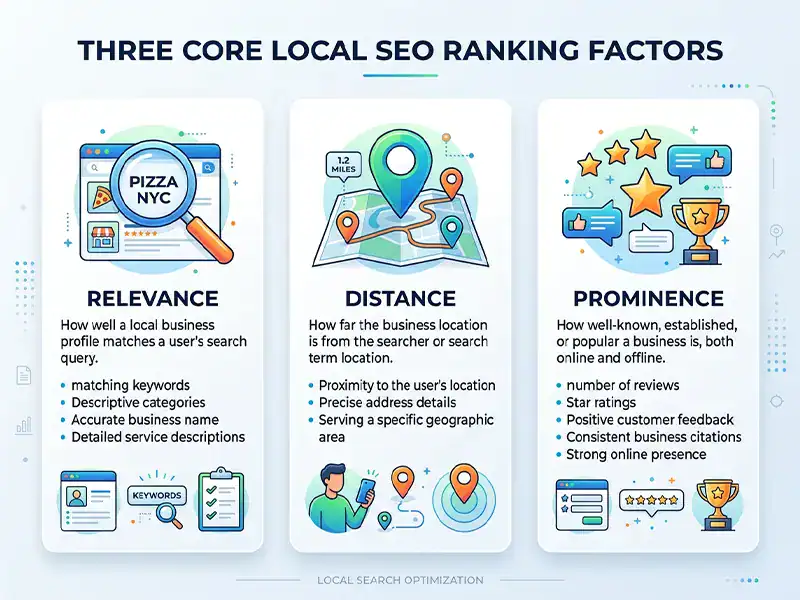
How Google Ranks Local Businesses
Google’s local algorithm uses specific factors to determine which businesses appear in local search results and the local pack. Understanding these factors is key to improving your Google Maps ranking and overall business visibility. This is essential for local SEO strategies 2025.
Google considers three main elements for local search engine optimization: relevance, distance, and prominence.
Relevance
Relevance measures how well your business matches what the user is searching for on Google Search. Google examines your business’s name, website content, and crucially, your Google Business Profile. Ensure your profile accurately reflects your services and products, using local keywords that potential nearby customers might search for.
Distance
Distance refers to how close your business is to the person searching. Businesses nearer to the searcher have a higher chance of appearing at the top of local search results. This is a crucial proximity ranking factor that directly impacts local traffic. For instance, a search for “plumber Dallas” will prioritize businesses physically located in or very near Dallas.
Prominence
Prominence evaluates how well-known and trusted your business is within your local community. This is based on customer reviews and ratings, backlinks from other websites, and local citations across various directories. Higher ratings, a strong online presence, and active engagement through your Google Business Profile improve your business’s prominence and search engine rankings.
Google’s goal is to provide the most relevant, closest, and trustworthy results to location-based search queries. Optimizing for these three factors is non-negotiable for local success and boosting online visibility for local service providers.
Optimizing Your Google Business Profile
Your Google Business Profile is the cornerstone of effective local SEO. An optimized profile significantly increases your chances of appearing in the local pack and boosting your Google Maps ranking.
Studies show active profiles attract more engagement and improve online visibility, driving more local traffic directly to your business.
Claim and Verify Your Google Business Profile
The first step in any local SEO strategy is to claim and verify your Google Business Profile. This free tool allows local service providers to manage their online presence across Google Search and Google Maps, ensuring accurate information for nearby customers.
This foundational step is critical for appearing in local search results and establishing your business’s prominence.
Complete Your Profile Information for Maximum Prominence
Ensure your Google Business Profile is complete and accurate. Include essential information like contact details, operating hours, high-quality photos, and relevant attributes. Google uses this data for search relevance and distance calculations.
A fully optimized profile directly impacts your search engine rankings and overall business visibility, making it easier for nearby customers to find you.
Maintain and Update Your Profile for Higher Local Rankings
Regularly updating your hours, special offers, and posting news or events keeps your Google Business Profile active and fresh. This consistent engagement correlates directly with higher local rankings and improved online visibility in the local pack.
Use tools like Semrush’s Social Content AI for content ideas to keep your profile dynamic. This proactive approach ensures your business remains a top contender in location-based search results.
Local Keyword Research Strategies
Effective local SEO starts with understanding what your potential customers are searching for. This requires strategic local keyword research. Studies show local results can help Google Business Profiles rank higher in the local pack, driving significant local traffic.
Identify Local Keywords for Targeted SEO
Focus on keywords that include local modifiers. These can be city names, neighborhoods, or “near me” phrases. For example, instead of just “plumber,” consider “plumber Dallas” or “plumber near me Long Beach.” Incorporating these local keywords into your content and Google Business Profile boosts your online visibility for nearby customers.
Leverage Keyword Tools for Competitor Analysis
Competitor analysis suggests using tools like Semrush’s Keyword Gap and Google Autocomplete to find local-specific keywords. Google Keyword Planner can also provide valuable insights into search volume and keyword difficulty scores. The Keyword Magic Tool is excellent for uncovering a wide range of relevant terms that local service providers use to attract business visibility.
Understand Search Intent and Search Relevance
Analyze the search intent behind local keywords. Are users looking for directions, contact information, or service comparisons? Tailor your content to match this intent. Incorporate long-tail keywords for more specific queries, enhancing your search engine rankings. This ensures your local search results are highly relevant to what users are actively seeking on Google Search and Google Maps.
Building and Managing Local Citations
Local citations are online mentions of your business’s name, address, and phone number (NAP). Consistent NAP information across various online directories is crucial for local search results. Google verifies your business information through these citations, impacting your Google Maps ranking and overall online visibility.
NAP Consistency: A Pillar of Local SEO
Inconsistent NAP data can confuse Google and other search engines, negatively impacting your search engine rankings. Ensure your name, address, and phone number are identical everywhere your business is listed. This consistency is a critical factor for local SEO strategies 2025, signaling trustworthiness to Google Search and improving your chances of appearing in the local pack.
Major Local Platforms for Business Visibility
Submit your business information to major local platforms and directories. These include Yelp, Facebook, Yellow Pages, and industry-specific sites. These platforms are vital for location-based search and attracting nearby customers. Competitors advise monitoring citations via dedicated tools to maintain accuracy, which directly contributes to stronger local search results.
Structured vs. Unstructured Citations: Maximizing Business Prominence
Structured citations are listings in business directories and are fundamental for local service providers. Unstructured citations are mentions on blogs, news sites, or other web pages. Both types contribute significantly to your business’s visibility and trustworthiness, enhancing your overall search engine optimization efforts and improving your organic search results.
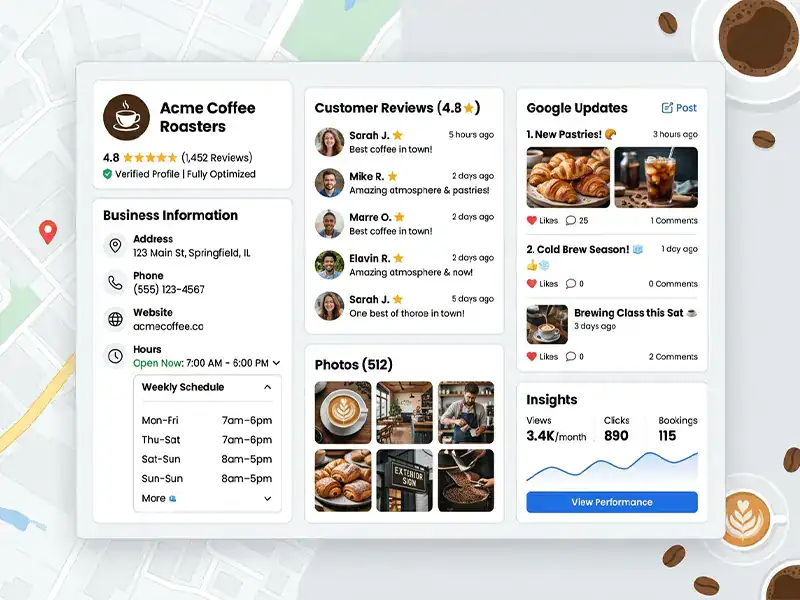
Review Management and Customer Feedback
Customer reviews significantly impact your local rankings and business prominence. Actively gathering and responding to feedback is a powerful local SEO strategy. Higher ratings and active engagement, even through AI reply tools, improve visibility and trust. This directly impacts your business’s visibility in Google Search and Google Maps ranking.
Encourage Customer Reviews
Make it easy for nearby customers to leave reviews on your Google Business Profile and other relevant platforms. Positive reviews build trust and improve your online visibility. This is a critical component of strong SEO strategies for local service providers in 2025.
Respond to All Reviews
Respond to both positive and negative reviews professionally and promptly. This shows you value customer feedback and are engaged with your audience. Active engagement signals to Google that your business is responsive, improving its standing in local search results and the local pack.
Leverage Feedback for Improvement
Use customer feedback to identify areas for business improvement. This not only enhances your services but also reinforces your commitment to customer satisfaction. Analyzing feedback can also inform your keyword research and help you understand the specific needs of your location-based search audience.
Advanced Local SEO Tactics: Driving Targeted Local Traffic
Beyond the fundamentals, advanced strategies can further boost your local traffic and search engine rankings. These targeted SEO approaches ensure your business stands out in the crowded digital landscape, attracting more nearby customers.
Local Content Strategy: Optimizing for Location-Based Search
Integrate local keywords naturally into your website content, blog posts, and service pages. This is crucial for improving your online visibility in location-based search queries. For instance, if you’re a plumber in Dallas, include phrases like “Dallas emergency plumber” or “best plumbing services Dallas” throughout your content.
Create location-specific landing pages if you serve multiple areas like Dallas, Los Angeles, or Long Beach. Each page should be optimized with unique content, local testimonials, and a clear call to action. This signals strong relevance to Google Search and helps you rank higher in local search results.
Mobile-Friendliness: A Critical Ranking Factor for Local Search
Ensure your website is fully mobile-friendly. A significant portion of local searches occur on mobile devices, making a seamless mobile experience a critical ranking factor. Google prioritizes websites that offer excellent website usability on all devices, directly impacting your Google Maps ranking and overall business visibility.
Competitor Analysis: Uncovering Local SEO Strategies 2025
Regularly conduct competitor analysis to understand what’s working for others in your local market. Use tools like Semrush’s Keyword Gap to identify what local keywords your competitors rank for in the local pack and organic search results. This helps you refine your own keyword research and content strategy.
Analyze their Google Business Profile optimization, review management strategies, and overall SEO strategies for 2025. Understanding their strengths and weaknesses allows you to identify opportunities to outperform them and capture more local traffic. Pay attention to their service descriptions, photos, and how they engage with nearby customers through reviews.
Local Keyword Research Strategies: Finding Your Niche
Effective local keyword research is the foundation of any successful local SEO campaign. Beyond generic terms, focus on long-tail keywords with local modifiers like “best coffee shop near me” or “dentist in Long Beach.” Use tools like Semrush’s Keyword Magic Tool, Google Autocomplete, and Google Keyword Planner to uncover high-volume, low-difficulty local keywords.
Prioritize keywords based on their search volume, keyword difficulty score, and search intent. Are users looking for information, a specific service, or ready to make a purchase? Aligning your content with user intent will improve your search relevance and drive more qualified leads to your business.
Optimizing Google Business Profile: Your Local Search Hub
Your Google Business Profile is the cornerstone of your local SEO efforts. An optimized profile significantly increases your chances of appearing in the local pack and Google Maps ranking. Ensure all contact information, hours of operation, and service descriptions are accurate and complete. Upload high-quality photos and videos to showcase your business.
Studies show active and comprehensive profiles attract more engagement and improve business prominence. Regularly update your profile with posts about offers, events, or news. This consistent activity signals to Google that your business is active and relevant, enhancing your online visibility to nearby customers.
Maintaining and Updating Business Profiles: Staying Relevant
Regularly updating your Google Business Profile is not a one-time task; it’s an ongoing process vital for maintaining high local search results. Update your hours for holidays, post about new services or products, and share relevant news or events. This keeps your profile fresh and engaging for potential clients.
Consistent updates correlate with higher local rankings and better engagement from nearby customers. Consider using tools like Semrush’s Social Content AI for ideas to keep your profile content dynamic and appealing. This commitment to maintenance demonstrates your business is active and reliable.
Review Management and Customer Feedback: Building Trust and Prominence
Customer reviews significantly impact your local rankings and business prominence. Actively gathering and responding to feedback is a powerful local SEO strategy. Higher ratings and active engagement, even through AI reply tools, improve online visibility and trust, directly impacting your Google Search and Google Maps ranking.
Make it easy for nearby customers to leave reviews on your Google Business Profile and other platforms. Encourage honest feedback and respond professionally to all reviews, positive or negative. This engagement builds trust and signals to Google that you are a reputable and responsive local service provider.
Importance of Local Citations (NAP Consistency): Verifying Your Business
Local citations, which are mentions of your business’s Name, Address, and Phone number (NAP) across various online directories, are crucial for verifying your business information with Google. Consistent NAP information across platforms like Yelp, Yellow Pages, and industry-specific directories enhances your trustworthiness and business visibility.
Google cross-references this information to verify your business details, which affects your relevance and prominence in local search results. Competitors advise submitting accurate information to major local platforms and regularly monitoring your citations via tools to ensure consistency and correct any discrepancies. Inconsistent NAP can confuse search engines and harm your local SEO efforts.
Results: Boosting Small Business Calls with Local SEO
We often see dramatic improvements for businesses that implement these local SEO strategies. For one client, a local service provider, their call volume surged from 15 calls per week to 70 calls per week within just three months. This significant increase was a direct result of comprehensive Google Business Profile optimization and local citation cleanup, driving substantial ROI.
The Technical Fixes That Drove Growth
Our targeted SEO strategies focused on specific technical improvements. Each action was designed to enhance online visibility and improve Google Maps ranking, ensuring more nearby customers found our client.
- Google Business Profile Optimization: We audited and optimized all fields within their Google Business Profile. This included accurate business hours, services, photos, and a compelling business description, directly impacting their performance in the local pack and organic search results.
- NAP Consistency: We ensured Name, Address, and Phone (NAP) consistency across over 50 local directories. This cleanup of business citations builds trust with Google and improves search engine rankings.
- Review Management: We implemented a strategic review generation and response strategy. Higher ratings and active engagement through AI reply tools improve visibility and customer trust, which is a key prominence factor for Google.
- Local Keyword Targeting: We conducted thorough keyword research using tools like Semrush’s Keyword Magic Tool and Google Keyword Planner. This allowed us to target high-volume local keywords, including “near me” and specific city names (e.g., Dallas, Los Angeles), within their website content, improving location-based search relevance.
These efforts led more nearby customers to find our client on Google Search and Google Maps, resulting in a significant boost in business visibility and conversions. It’s a clear example of how dedicated local SEO can transform local traffic into tangible business growth.
Frequently Asked Questions About Local SEO
What is the local pack in Google Search?
The local pack is the prominent block of three business listings that appears at the top of Google Search Results Pages (SERP) for location-based search queries. It often includes a Google Maps display and is absolutely crucial for achieving strong local business visibility and attracting nearby customers.
How often should I update my Google Business Profile?
You should update your Google Business Profile regularly to maintain business prominence and signal activity to Google. At a minimum, check it monthly for accuracy. Post news, offers, or events weekly to keep it active, enhance your online visibility, and improve your Google Maps ranking. This consistent engagement is vital for effective SEO strategies in 2025.
Does local SEO only work for businesses with a physical storefront?
No, local SEO also significantly benefits local service providers who operate within a specific service territory but may not have a physical storefront. Plumbers, electricians, and mobile beauticians are prime examples. Optimizing for local search results ensures these businesses still appear for relevant location-based search queries, driving local traffic.
What is NAP consistency, and why is it important for local search results?
NAP consistency refers to ensuring your business’s name, address, and phone number are identical across all online listings and directories. It’s important because Google uses this consistency to verify your business information and build trust. This directly impacts your search engine rankings and overall business visibility in local search results. Inconsistent NAP data can confuse Google and negatively affect your local SEO efforts.
Can I do local SEO myself, or do I need an expert?
You can certainly start with basic local SEO tasks yourself, like claiming and optimizing your Google Business Profile. However, for advanced SEO strategies in 2025, in-depth competitor analysis, keyword research using tools like Semrush’s Keyword Magic Tool, and ongoing optimization for local keywords, an expert often delivers better and faster results, significantly boosting your local traffic and search engine rankings.
How does Google rank local businesses in the local pack?
Google ranks local businesses primarily based on three core factors: relevance, distance, and prominence. Relevance means how well your business matches the user’s location-based search query. Distance refers to your proximity to the searcher or the location specified in their search. Prominence considers factors like your reviews, ratings, online authority, and overall business visibility across the web. Optimizing your Google Business Profile and local citations directly influences these factors.
What are effective local keyword research strategies?
Effective local keyword research involves identifying the specific terms nearby customers use. Start by brainstorming local keywords with modifiers like “near me,” city names (e.g., Dallas, Los Angeles, Long Beach), or service-specific terms. Utilize tools like Google Autocomplete, Google Keyword Planner, and Semrush’s Keyword Gap or Keyword Magic Tool to uncover high-volume, relevant local keywords. Focusing on search intent and long-tail keywords with local modifiers can significantly improve your local search results.
Why is optimizing my Google Business Profile critical for local SEO?
Optimizing your Google Business Profile is critical because it’s the primary way Google gathers and displays information about your business in local search results and Google Maps. A fully optimized profile, including accurate contact info, hours, photos, and relevant attributes, significantly increases your chances of appearing in the local pack. Active profiles attract more engagement and signal business prominence to Google, enhancing your online visibility and ultimately driving local traffic.
How does review management impact my Google Maps ranking?
Review management directly impacts your Google Maps ranking and overall local SEO. Gathering positive reviews and actively responding to customer feedback builds trust and signals business prominence to Google. Higher ratings and consistent engagement through review platforms improve your business’s visibility and influence Google’s perception of your relevance and trustworthiness. This, in turn, can lead to a stronger position in the local pack and better local search results.
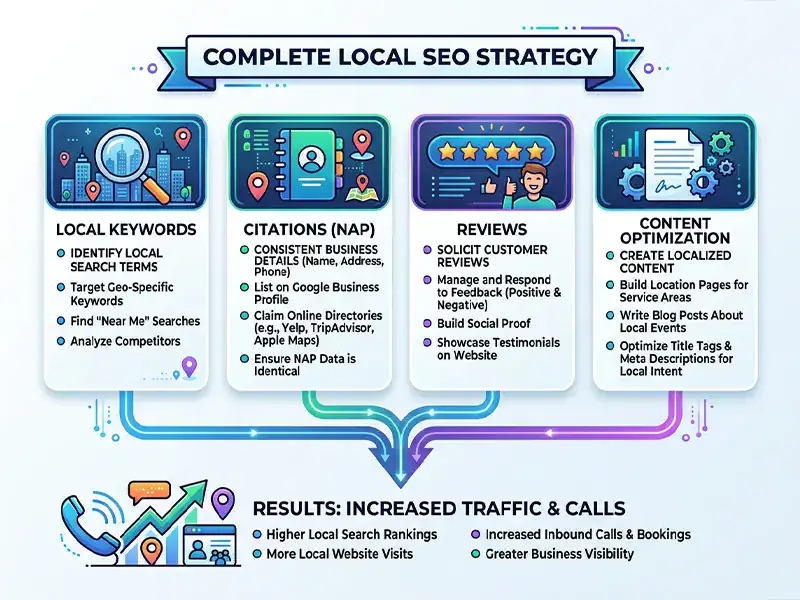
Take Action Now: Boost Your Local Search Rankings
The data is clear: local SEO drives calls and boosts sales. If you are a founder or small business owner, you cannot afford to ignore your local online presence. As of 2026, strong local SEO strategies are non-negotiable for attracting nearby customers and achieving significant growth. Google delivers billions of local search results monthly, making your business visibility crucial.
Audit your own local presence immediately. Ensure your Google Business Profile is optimized, your citations are consistent, and you are actively engaging with customer reviews. This is how you attract nearby customers and achieve significant growth in 2026. Remember, Google considers relevance, distance, and prominence when ranking local businesses in the local pack.
How Google Ranks Local Businesses for Maximum Visibility
To dominate local search results, understand Google’s core ranking factors: relevance, distance, and prominence. Relevance means how well your business matches a user’s location-based search query. Distance refers to how close your business is to the searcher’s location. Prominence is about how well-known your business is, factoring in reviews, ratings, and overall online visibility. Optimizing for these factors is essential for a strong Google Maps ranking.
Optimizing Your Google Business Profile: Your Local SEO Cornerstone
Your Google Business Profile is the most critical element for local SEO. An optimized profile significantly increases your chances of appearing in the local pack and attracting local traffic. Include complete and accurate contact information, business hours, and high-quality photos. Actively use attributes to highlight unique offerings. Studies show that active, well-maintained profiles attract more customer engagement and improve your search engine rankings.
Local Keyword Research Strategies: Finding Your Target Audience
Effective local keyword research is vital for connecting with nearby customers. Utilize tools like Semrush’s Keyword Gap and Google Autocomplete to identify local keywords such as “near me,” specific city names like Dallas or Los Angeles, and service modifiers. Look for keywords with high search volume and manageable keyword difficulty. Understanding search intent and incorporating long-tail keywords with local modifiers will significantly improve your online visibility in local search results.
Maintaining and Updating Business Profiles: Stay Active, Stay Visible
Regularly updating your Google Business Profile is crucial for maintaining high local search rankings. Check it monthly for accuracy, and post news, offers, or events weekly. This signals to Google that your business is active and relevant, enhancing your business’s prominence. Tools like Semrush’s Social Content AI can help generate fresh content ideas, ensuring your profile stays dynamic and engaging for potential customers.
Review Management and Customer Feedback: Building Trust and Rankings
Gathering and responding to customer reviews is a powerful local SEO strategy. Higher ratings and active engagement through review replies directly impact your local rankings and build trust with nearby customers. Positive feedback improves your online visibility and demonstrates business prominence to Google. Implement a system to encourage reviews and respond promptly, further solidifying your position in the local pack.
Importance of Local Citations (NAP Consistency): Verifying Your Business
NAP consistency, ensuring your business’s name, address, and phone number are identical across all online listings and directories, is fundamental for local search engine optimization. Google uses this consistency to verify your business information and build trust, directly impacting your search engine rankings. Submit your information to major local platforms and monitor your citations via tools to ensure accuracy and avoid discrepancies that could hurt your local pack ranking.
References